
South Carolina Residents Directory
The South Carolina residents directory gives you a way to look up public records held by state and county offices. South Carolina has 46 counties, each with its own clerk of court, register of deeds, and probate court. You can search court case files, vital records, property documents, and criminal history data from your home or at a local office. The state keeps millions of records on file. Many are free to view online. Others need a written request or a small fee. This guide walks through the main tools and sources for finding records in South Carolina.
South Carolina Residents Directory Quick Facts
South Carolina Residents Directory Portal
The South Carolina State Records portal holds over 45 million public records. It covers court files, vital records, criminal data, and property documents from all 46 counties. You can search by name, county, or record type. Results link back to the official government source for each record. The portal pulls data from clerks of court, the register of deeds, and state agencies. Under S.C. Code Ann. § 30-4-15, South Carolina law gives the public the right to inspect and copy government records. This portal makes that access simple.
The South Carolina residents directory at the state records site is a screenshot shown below from southcarolina.staterecords.org.
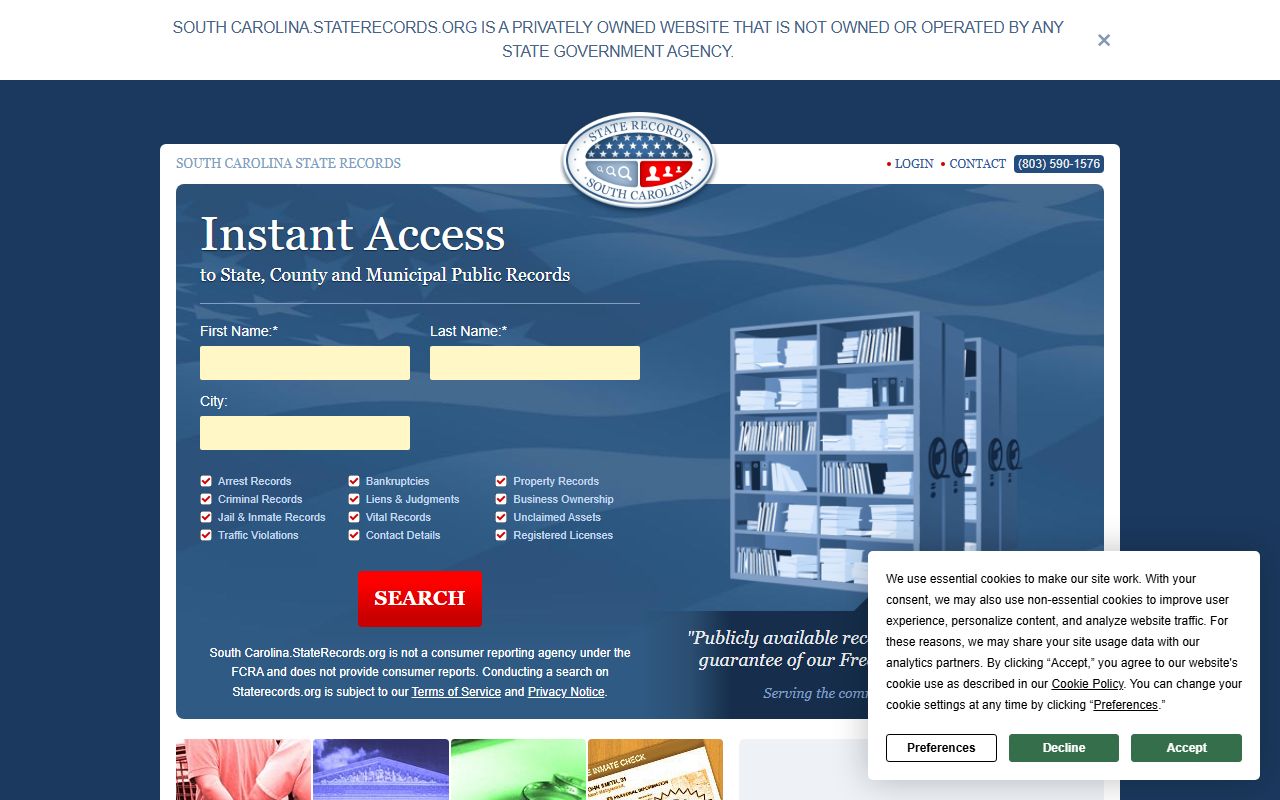
The search tool on this site lets you filter by record type. Pick from court, criminal, vital, or property categories. You can also narrow results by county. The site is free to browse, though some certified copies carry a fee from the issuing agency.
Note: The state records portal is not a government site but links to official South Carolina agency sources for each record type.
Court Records in the Residents Directory
The South Carolina Judicial Branch Public Index is the main tool for searching court case records. It spans all 46 counties. You can look up civil, criminal, family, and probate cases. The system is free. Enter a party name or case number to start. Results show the case name, filing date, status, and court type. Click on any case for more details including parties, actions, and financial data.
A key change took effect on January 1, 2026. Home addresses no longer appear on the public index for new or existing cases. This privacy update applies to every case type in South Carolina. Before this date, addresses were visible in search results. Now you must contact the clerk of court for address details. The case number format uses a code for court type: CP for civil, GS for criminal, DR for family, and PR for probate. Some municipal court records also appear in the Public Index, though not all municipalities take part. Under S.C. Code Ann. § 30-4-30, any person has the right to inspect or copy public records, and the court system follows this standard for case file access in South Carolina.
You can also search South Carolina court records through southcarolina.courtcasefinder.com, as shown below.
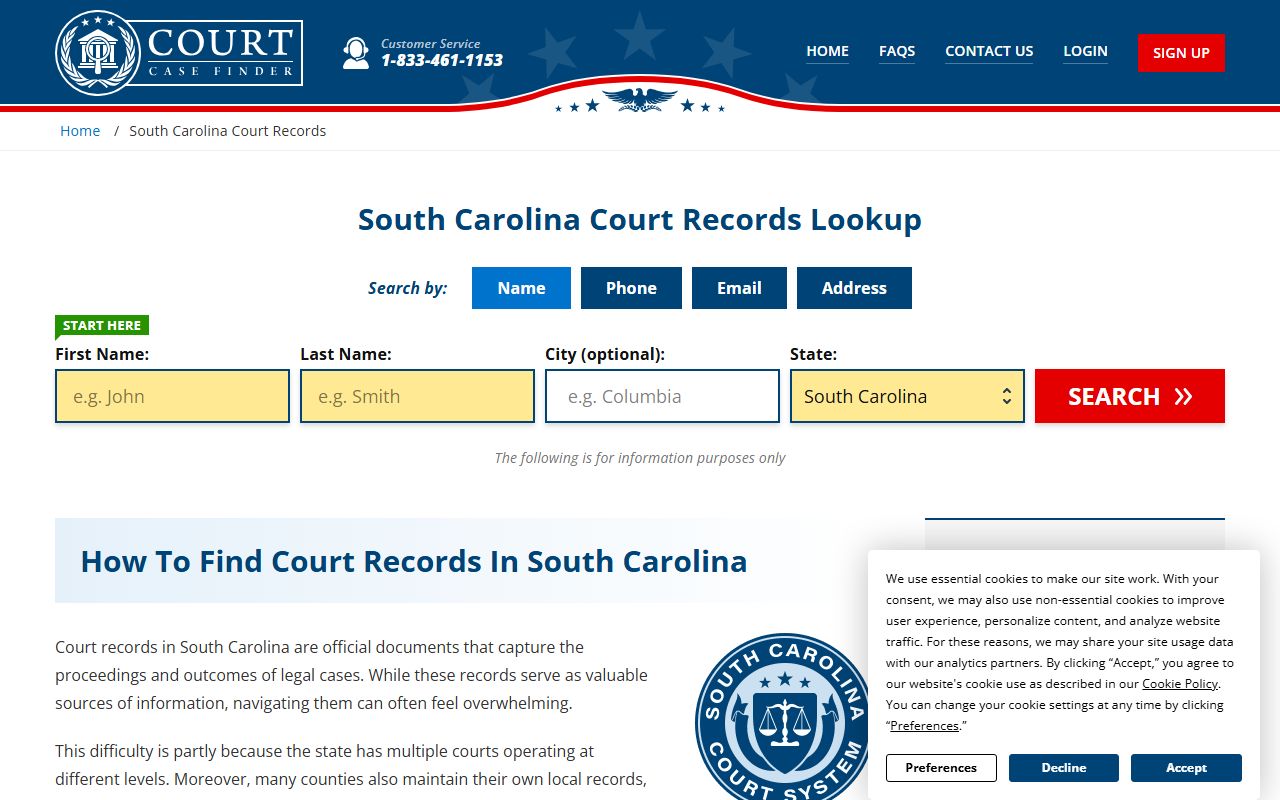
This tool offers another way to find case data across the state. It pulls from the same public index but presents results in a different layout.
South Carolina Vital Records Directory
The South Carolina Department of Health and Environmental Control maintains birth, death, marriage, and divorce records. DHEC Vital Records has held these files since January 1915. Birth certificates cost $12 for the search fee, which includes one certified copy if found. Each extra copy is $3. Death records are restricted for 50 years. Birth records stay restricted for 100 years. After those periods, they become open to the public.
To get a vital record, you need a completed form and a copy of your photo ID. Mail requests go to the Office of Vital Records, SC DHEC, 2600 Bull Street, Columbia, SC 29201. You can also order through VitalChek online or visit a regional DHEC office. The phone number for the main office is (803) 898-3630. Payment must be by money order or cashier's check made out to SCDHEC Vital Records. South Carolina residents can also visit local DHEC offices in cities like Greenville, Charleston, and Columbia for in-person service.
Note: Marriage and divorce certificates from DHEC contain less detail than full court records from the county clerk of court in South Carolina.
SLED Criminal History Checks
The South Carolina Law Enforcement Division runs the CATCH system. CATCH stands for Citizens Access to Criminal Histories. It lets you look up criminal records from South Carolina only. National records are not included. The minimum info you need is a last name and date of birth. Results come from fingerprint data submitted by law enforcement under Section 23-3-120.
The SLED CATCH portal is shown below from catch.sled.sc.gov.
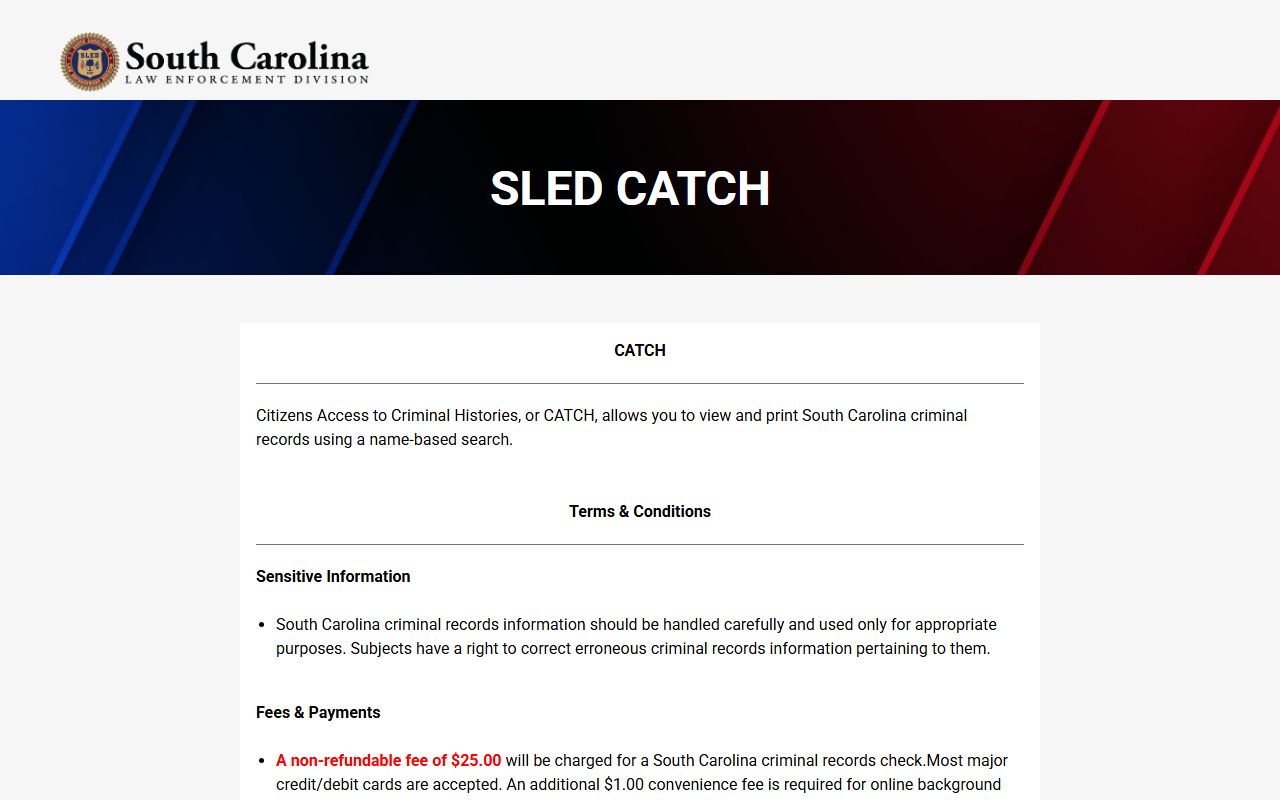
Each search costs $25 plus a $1 online fee. Certain government and charity groups pay just $8. You can print results right away. SLED headquarters is at 4400 Broad River Road, Columbia, SC 29210. You can also mail requests to SLED Records Department, P.O. Box 21398, Columbia, SC 29221-1398. Wanted person data does not show up in CATCH results. For that, check the SLED most wanted page or contact local law enforcement in South Carolina.
South Carolina Archives and History Records
The South Carolina Department of Archives and History holds the oldest records in the state. Criminal court files dating from 1769 to 1944 are digitized and searchable online. Legislative papers from 1782 to 1866 are also available. The Archives keeps non-current state, county, and municipal records. Their online catalog, SCArchCat, lets you search holdings from home before planning a visit.
Below is a view of the South Carolina Archives and History website from scdah.sc.gov.
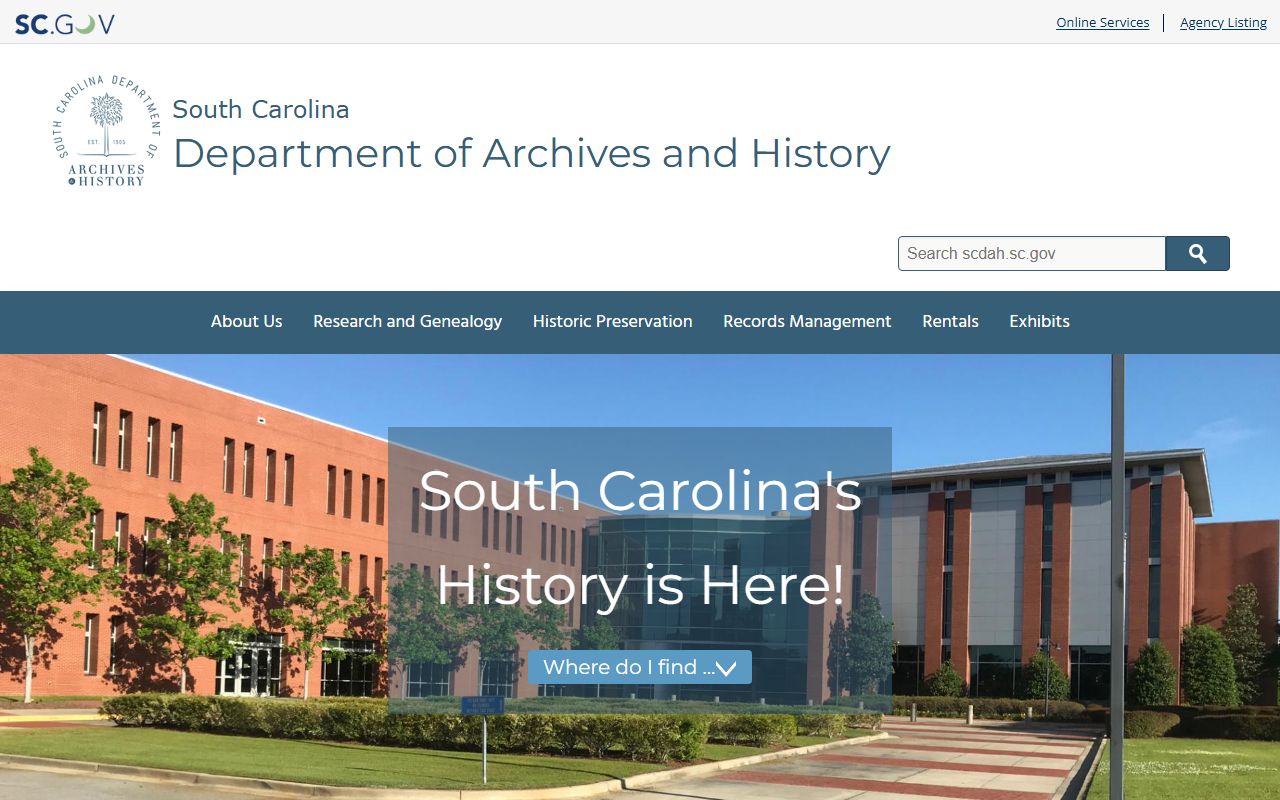
The Research Room is open Tuesday through Saturday, 8:30 a.m. to 5:00 p.m. It sits at 8301 Parklane Road, Columbia, SC 29223. Free parking is available. The Archives has digitized over 11,000 Revolutionary War claims, death indexes from 1915 to 1961, and will transcripts from 1782 to 1855. Staff can help with genealogy and historical research. Confederate pension applications, school photographs from 1915 to 1936, and plats for state land grants from 1784 to 1868 are all part of the collection. South Carolina residents use these records for family history, legal matters, and property research.
Residents Directory State Databases
Several online databases compile South Carolina public records into one place. The South Carolina State Databases guide lists government data sources by topic. It covers court records, vital statistics, property files, and more. This resource is maintained by library professionals and updated regularly.
A view of the South Carolina state databases page is shown below from godort.libguides.com.
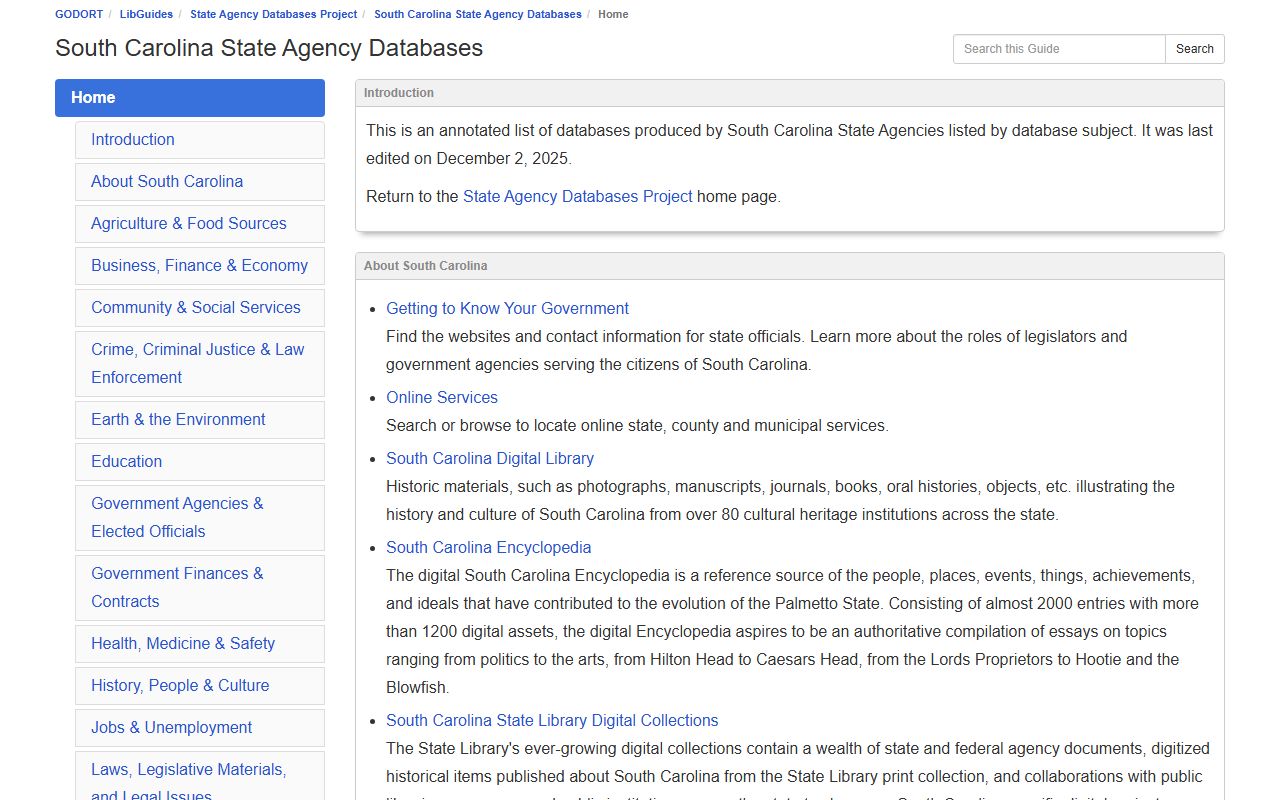
This guide groups databases by category. You can find links to the Department of Corrections inmate search, DHEC vital records, and the judicial public index all in one place. It also lists lesser-known resources like historical land grant records and legislative archives. South Carolina residents and researchers from other states use this guide as a starting point for locating records.
Note: Database links on third-party guide pages may change, so verify each link leads to the current South Carolina government source.
South Carolina Inmate Search Directory
The South Carolina Department of Corrections runs a public inmate search tool. You can look up current and former inmates by name or ID number. Results show the inmate's status, facility, sentence length, and projected release date. The system covers state prisons only. County jail records are held by each county sheriff's office.
The inmate search page is shown below from public.doc.state.sc.us.
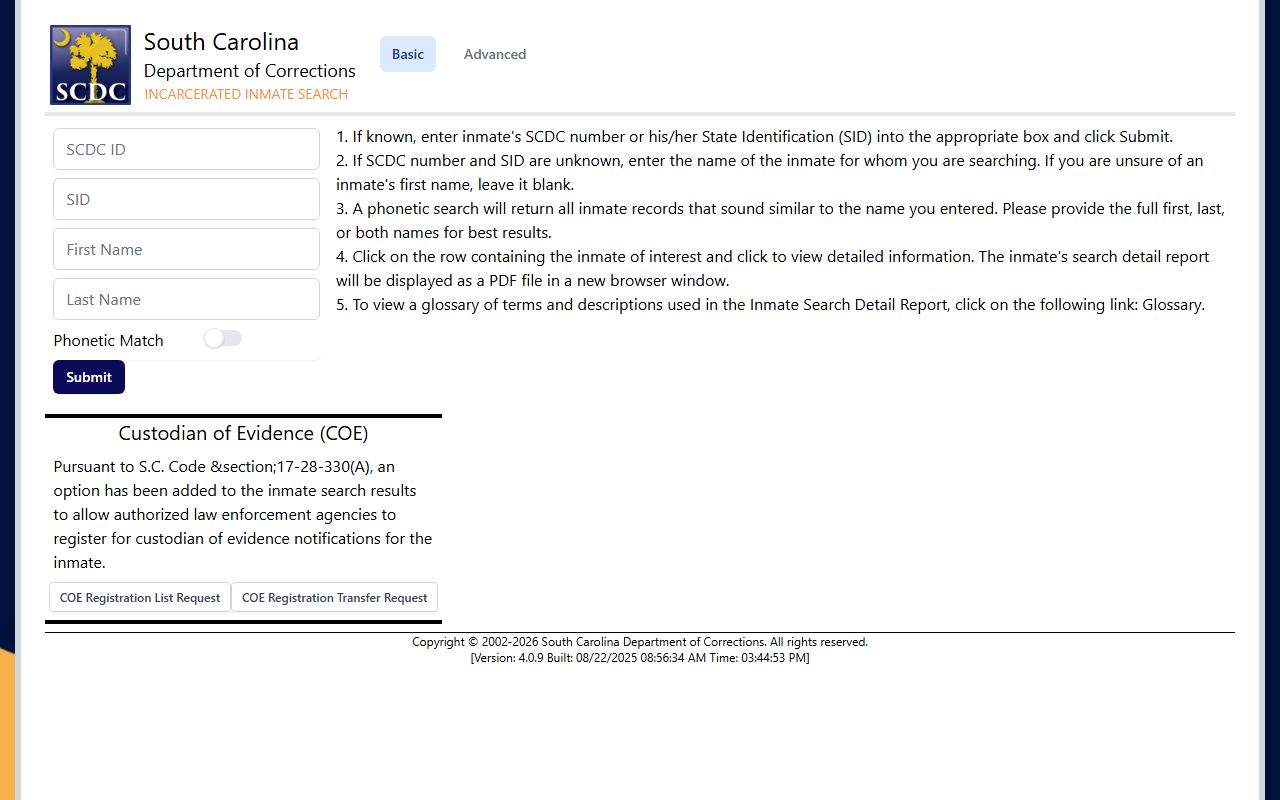
This tool is free to use. No account is needed. South Carolina keeps records for all inmates who have served time in state facilities. The data is part of the public record under S.C. Code Ann. § 30-4-20, which defines public records as materials prepared or used by a public body regardless of format. For county-level jail records, contact the local sheriff in South Carolina.
How to Request Records in South Carolina
South Carolina's Freedom of Information Act gives the public broad access to government records. Under S.C. Code Ann. § 30-4-40, public bodies must respond to records requests within certain time frames. You do not need to be a South Carolina resident to make a request. You do not need to give a reason. Simply identify the records you want and submit your request in writing to the office that holds them.
Most agencies accept requests by mail, email, or in person. Fees are limited to the actual cost of searching for and copying records under the FOIA. South Carolina law says fees must be reasonable. If an agency denies your request, you have the right to appeal. The appeal goes to the circuit court in the county where the agency sits. Many records are also available online through the residents directory tools listed on this page, which can save time and avoid fees entirely.
Property records in South Carolina are kept by the register of deeds in each county. Under S.C. Code Ann. § 30-5-10, all conveyances of land must be recorded with the register. These records include deeds, mortgages, plats, and liens. Most counties offer free online search tools for property data. For certified copies, you must visit the office or mail a request with payment.
- Court records: search the SC Judicial Branch Public Index by name or case number
- Vital records: order from DHEC by mail, online, or in person
- Criminal history: use SLED CATCH for South Carolina records
- Property records: check the county register of deeds website
- Historical records: visit the SC Archives or search SCArchCat online
Note: Response times vary by agency, but South Carolina law requires public bodies to act on FOIA requests promptly.
Browse South Carolina Residents Directory by County
Each county in South Carolina keeps its own records through the clerk of court and register of deeds. Pick a county below to find local directory resources and contact info.
Residents Directory for South Carolina Cities
Residents of South Carolina cities can look up records through their county offices. Select a city below to learn about local resources.